

 注: 建议图片大小150px*50px
丨
English
注: 建议图片大小150px*50px Views: 0 Author: Site Editor Publish Time: 2026-09-09 Origin: Site
In heavy industrial applications like petrochemical refining, hydrometallurgy, and desalination, engineers face a persistent conflict. You must maximize equipment lifespan in severe corrosive environments while controlling escalating material costs. Specifying solid exotic alloys guarantees uniform corrosion resistance. However, it exponentially increases capital expenditure and extends procurement lead times. Conversely, utilizing inferior cladding or coating methods introduces severe risks. You face potential delamination, localized corrosion, and catastrophic failure under high pressure or thermal cycling. To balance metallurgical integrity with project economics, decision-makers must evaluate alternative materials. You need to compare an Explosion Bonded Clad Plate against a traditional solid alloy plate. This analysis provides an evidence-based framework for specifying materials based on pressure vessel codes, fabrication constraints, scalability for large components, and lifecycle longevity.
Economic Threshold: Explosion bonded cladding becomes highly cost-effective compared to solid alloys when the total required plate thickness exceeds 3/4 inch (19 mm), particularly for high-cost metals like titanium or nickel.
Metallurgical Integrity: Unlike traditional welding or mechanical bonding, explosion bonding creates a solid-state, metallurgical bond at the atomic level, offering shear strengths that routinely exceed ASME and ASTM minimum requirements.
Design Flexibility & Scalability: Clad plates allow engineers to decouple mechanical design from corrosion design—utilizing a thick, inexpensive carbon steel backing for pressure containment and a thin, premium alloy layer for chemical resistance. This method offers unmatched scalability for large components and challenging structural designs where solid exotic alloys are limited by mill ingot sizes.
Fabrication Complexity: While clad plates reduce raw material costs, they require specialized bimetallic welding procedures, edge preparation, and rigorous Non-Destructive Examination (NDE) during fabrication.
Establishing baseline expectations for pressure vessels, piping systems, and heat exchangers dictates the entire engineering approach. These components operate in highly acidic, chloride-rich, or high-temperature environments. Examples include amine contactors in gas processing plants or acid settling tanks in mining operations. Engineers traditionally rely on solid alloy plates to survive these harsh conditions. A solid plate provides a homogenous cross-section. This uniformity simplifies mechanical design and fabrication. You get predictable mechanical properties throughout the entire thickness of the material, allowing for straightforward stress calculations and standard forming procedures.
Performance predictability remains the primary engineering advantage of solid alloys. You can calculate precise corrosion allowances without worrying about dissimilar metal interactions. If the environment corrodes the inner surface, the underlying material offers the exact same chemical resistance. There is no risk of exposing a vulnerable backing steel to aggressive media. Welders use standard, single-alloy welding procedures. This eliminates the need for complex bimetallic weld joints, specialized overlays, or barrier layers. The homogenous nature of the plate means that thermal expansion happens uniformly, preventing internal shear stresses during rapid heating or cooling cycles.
Specifying thick solid plates of exotic materials introduces massive supply chain challenges. Analyzing the cost multipliers reveals significant hurdles for large-scale projects. Exotic metals like titanium, zirconium, and high-nickel alloys carry steep premiums. When you require a two-inch thick plate for pressure containment, paying for two inches of solid titanium wastes capital. Only the inner fraction of an inch actually contacts the corrosive fluid. The remaining thickness merely provides structural support, a job easily handled by standard carbon steel.
Global supply chain volatility further complicates solid alloy procurement. Raw material scarcity drives up lead times for heavy-gauge solid alloys. Steel mills require massive ingots to roll thick exotic plates. Many mills demand high minimum order quantities. If your project requires a custom thickness or a small batch, you face exorbitant costs and severe delays. Extended mill lead times routinely push project schedules back by several months. These logistical bottlenecks force engineers to seek alternative material strategies that decouple the mechanical requirements from the chemical resistance requirements.
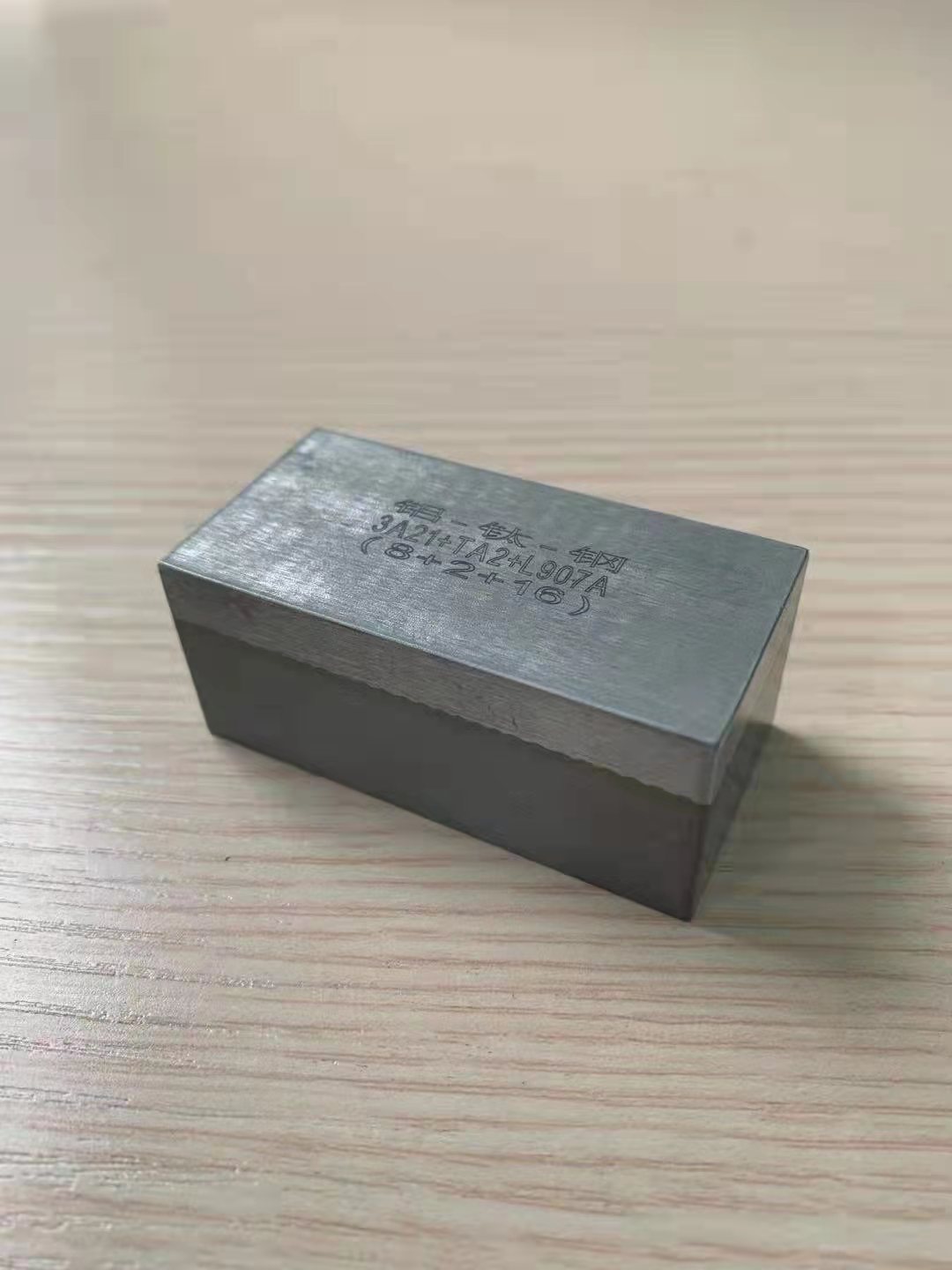
Explosion bonding relies on a highly controlled solid-state welding process. It does not use heat to melt the metals together. Instead, it uses the immense energy of a controlled explosive detonation. Technicians place the cladding metal at a precise standoff distance above the base metal. They cover the cladding metal with a specialized explosive powder, typically an ammonium nitrate-based mixture. Upon detonation, the explosive force drives the cladding metal downward at extreme velocities, often exceeding 2000 meters per second.
This high-velocity impact creates a collision point that travels across the plate. The immense pressure at this collision point creates a plasma jet. This jet sweeps away surface oxides and impurities from both metals. The clean metal surfaces collide under millions of pounds of pressure. They share electrons and form a true metallurgical bond at the atomic level. The resulting interface features a distinct wavy, interlocking pattern. Because the process happens in microseconds, no bulk melting occurs. You avoid the heat-affected zone (HAZ) degradation associated with fusion welding, preserving the original mechanical properties of both metals.
This solid-state process enables incredible versatility in material combinations. You can bond metals that are otherwise impossible to join. A titanium clad plate perfectly illustrates this advantage. Titanium and carbon steel are metallurgically incompatible. Conventional fusion welding melts them together, forming brittle intermetallic compounds. These compounds shatter under minimal stress. Explosion bonding forces them together without melting, creating a ductile, high-strength bond that withstands severe mechanical forming.
Other high-performance combinations serve specific industrial needs. A nickel clad plate or a stainless steel clad plate provides exceptional defense against localized pitting and chloride stress corrosion cracking. These combinations dominate the construction of petrochemical scrubbers, chemical reactors, and phase separators. They offer the chemical resistance of premium alloys like Alloy 625 or 316L stainless backed by the immense strength of heavy carbon steel grades like SA-516 Gr 70.
Electrometallurgical applications require different properties. A copper clad plate combines high thermal and electrical conductivity with structural rigidity. Solid copper lacks the tensile strength required for large structural components. Bonding it to steel solves this mechanical deficiency while preserving its conductive properties for busbars and cathode plates.
Explosion bonding excels at difficult-to-bond combinations. It easily pairs metals with vastly different melting points. It accommodates materials with conflicting thermal expansion coefficients. The wavy interface absorbs and distributes stress, preventing delamination even when the two metals attempt to expand at different rates during operational thermal cycling.
Evaluating mechanical strength requires strict adherence to industry codes. Explosion bonded plates meet the rigorous requirements of the ASME Boiler and Pressure Vessel Code (BPVC) Section VIII. Engineers approach clad plate calculations differently than solid alloy calculations. The base metal dictates the structural and pressure-retaining capabilities. For example, SA-516 Gr. 70 carbon steel handles all the mechanical stress. Engineers generally ignore the clad layer in strength calculations. This decoupling simplifies the design process. You size the steel for pressure and size the clad layer for corrosion.
The specified corrosion resistant plate layer provides the necessary barrier protection. This layer typically ranges from 2mm to 10mm in thickness. It ensures the equipment survives its intended design life. You must address dual-threat environments carefully. Some applications involve both chemical corrosion and mechanical wear. Hydrometallurgy slurries, for instance, erode soft metals quickly. Specific clad alloys provide advanced performance against this erosion-corrosion matrix. The hard backing steel prevents the vessel from deforming under heavy slurry loads.
A common misconception plagues the cladding industry. Some assume clad layers are porous or structurally inferior to solid plates. This is entirely false. Explosion bonding maintains the full wrought properties of the original alloy. The cladding metal arrives from the mill as a fully dense, solid sheet. The bonding process does not alter its internal grain structure. It remains as impermeable and chemically resistant as a standalone solid plate.
Thermal cycling introduces potential delamination risks in bimetallic materials. You must analyze the shear strength of the wavy bond interface. Explosion bonded plates routinely exhibit shear strengths exceeding 20,000 psi, easily surpassing ASTM A264 requirements. This robust bond withstands extreme temperature fluctuations. It survives rapid heating and cooling cycles without separating. It also performs exceptionally well under deep vacuum conditions, where mechanical liners would collapse.
Comparing thermal expansion coefficients highlights the strength of the wavy interface. Solid alloys expand uniformly. Bimetallic plates experience differential expansion. The alloy layer tries to expand faster or slower than the steel backing. The interlocking wavy bond mechanically restricts this differential movement. It forces the two metals to act as a single composite unit. This prevents the shear stresses from tearing the layers apart during thermal cycling.
Performance Metric | Solid Alloy Plate | Explosion Bonded Clad Plate |
|---|---|---|
Pressure Containment | Relies entirely on the expensive alloy | Relies on the high-strength carbon steel backing |
Corrosion Resistance | Uniform throughout the entire thickness | Concentrated in the 2mm-10mm alloy layer |
Thermal Expansion | Uniform expansion | Differential expansion restricted by the metallurgical bond |
Shear Strength | N/A (Homogenous material) | Routinely exceeds 20,000 psi at the bond interface |
Code Calculations | Standard single-material ASME calculations | Base metal calculated for pressure; clad layer ignored |
Determining when to switch from solid alloys to clad plates requires a clear decision framework. Thickness thresholds dictate cost efficiency. If your equipment requires a total wall thickness of 1/2 inch, a solid stainless steel plate might be cheaper. The cost of the explosive bonding process outweighs the material savings at thin gauges. However, the economics shift dramatically as thickness increases.
When the required thickness reaches 2 inches, a clad plate becomes significantly more economical. The cost gap widens exponentially with thicker requirements and more exotic metals. Buying 3 inches of solid titanium is financially crippling for most projects. Buying 3 inches of carbon steel clad with 1/4 inch of titanium is highly viable. Engineers must calculate this threshold for every specific material combination. Nickel alloys and zirconium have much lower thickness thresholds for cladding viability due to their extreme raw material costs.
Procurement agility strongly influences project viability. Explosion bonding allows fabricators to use commercial off-the-shelf (COTS) backing steel. They pair this with readily available, thinner alloy sheets. This strategy drastically reduces overall project lead times. Custom-milled thick solid alloys often require special mill runs. You wait months for the mill to schedule your specific alloy and thickness.
Clad plates bypass these long mill queues. Fabricators source standard carbon steel plates locally. They procure thin alloy sheets from existing service center inventories. The explosion bonding process itself takes only a few weeks. This agile supply chain keeps fast-track projects on schedule. It protects project managers from raw material shortages and global shipping delays.
While clad plates offer immense material savings, they introduce specific fabrication challenges. Bimetallic welding procedures demand highly skilled labor and strict quality control. You cannot simply weld a clad plate like a solid steel plate. The process requires a specialized, multi-step approach to maintain both structural integrity and chemical resistance.
Clad Removal: The fabricator must strip back the clad layer from the joint edge. They machine or grind away the alloy to expose the bare carbon steel backing.
Base Metal Welding: Welders join the carbon steel base metal using standard structural filler wire. They complete the structural weld and grind it flush with the steel surface.
Barrier Layer Application: Welders apply a barrier layer of weld metal over the exposed steel. This prevents iron from bleeding into the final corrosion-resistant passes.
Alloy Overlay: Finally, they restore the corrosion-resistant layer. They apply a compatible alloy weld overlay across the joint, ensuring it ties smoothly into the original clad surface.
You must strictly mitigate the risk of iron dilution. If the welding arc pulls iron from the steel backing into the alloy overlay, it ruins the chemical resistance. Welders use specific barrier layers and low-heat input techniques, such as GTAW (Gas Tungsten Arc Welding), to prevent this iron bleed.
Forming, rolling, and machining present additional constraints. Fabricators must evaluate the ductility of the explosion bond. Fortunately, the metallurgical bond survives severe cold and hot forming. Fabricators routinely roll flat clad plates into tight cylinders for vessel shells. They press them into dished heads for reactor end-caps. They manufacture large-diameter clad pipes using standard press-braking and rolling equipment. The bond stretches and compresses without delamination.
Stress-relief annealing requires careful consideration. Heavy-wall pressure vessels often require post-weld heat treatment (PWHT). This heat treatment impacts both the base and clad materials. Engineers must select a temperature that relieves stress in the steel without sensitizing the alloy layer. If the temperature is too high, it might degrade the corrosion resistance of the cladding. You must balance the metallurgical needs of both metals during thermal processing.
Quality assurance and Non-Destructive Examination (NDE) are non-negotiable. Mandatory testing protocols verify bond integrity before any fabrication begins. Fabricators rely on 100% Ultrasonic Examination (UT). They test the plates to strict ASTM A578 standards. Technicians scan the entire surface area with ultrasonic probes. They look for any gaps or unbonded areas at the interface.
Detecting unbonded areas early prevents catastrophic failures during forming or operation. The industry accepts minor, isolated unbonded spots depending on the code requirements. However, critical applications demand near-perfect bonding. You must establish strict UT acceptance criteria during the procurement phase. Reject any plates that fail to meet these baseline integrity standards.
Understanding alternative cladding methods helps engineers specify the correct material. Explosion welding and roll bonding dominate the clad plate market. However, they operate on completely different physical principles. Explosion bonding is a high-energy, cold-welding process. It uses explosives to drive metals together in microseconds. Roll bonding uses extreme heat and pressure. Mills heat the base and clad metals to forging temperatures. They pass them through massive rollers, crushing them together until they bond.
These process differences create distinct thickness and material limitations. Roll bonding is generally limited to thinner plates. The rolling mill can only exert so much pressure. It also requires metallurgically compatible metals. You can successfully roll bond stainless steel to carbon steel. They have similar melting points and forging temperatures. You cannot roll bond titanium to steel. The extreme heat required for roll bonding causes titanium and steel to form brittle intermetallics. The bond shatters as it exits the rollers.
Explosion bonding overcomes these limitations. It handles incredibly thick plates. You can bond a thin alloy sheet to a 10-inch thick steel forging. It easily bonds metallurgically incompatible metals because it generates no bulk heat. It remains the only viable method for titanium, zirconium, and tantalum cladding. Furthermore, roll bonding requires massive production runs. Steel mills will not halt production to roll a single custom plate. Explosion bonding excels at small production runs, allowing you to order a single, custom-sized plate.
Feature | Explosion Bonding | Roll Bonding |
|---|---|---|
Process Type | High-energy, solid-state cold welding | High-heat, high-pressure mill rolling |
Material Compatibility | Bonds incompatible metals (e.g., Titanium/Steel) | Limited to compatible metals (e.g., Stainless/Steel) |
Thickness Limits | Virtually unlimited base thickness | Limited by mill rolling capacity |
Batch Size | Ideal for small, custom runs | Requires large mill minimum orders |
Heat Affected Zone | None (no bulk melting) | Significant thermal exposure during rolling |
Solid alloy plates remain the standard for thin-walled equipment or where bimetallic welding proves impractical. They offer simplicity in design and fabrication. However, for heavy-wall pressure vessels, large-scale components, and equipment requiring expensive exotic alloys, an explosion bonded clad plate offers superior structural integrity. It delivers maximum wear resistance at a fraction of the material cost.
Use a strict shortlisting logic for your next project. Specify solid alloys when the total required thickness is under 15-20mm. Use them when the chemical environment corrodes both the alloy and the backing steel equally. Specify explosion bonded cladding for high-pressure applications requiring thick walls. Mandate it for incompatible metal pairing, custom geometries, or when utilizing highly expensive alloys like nickel and zirconium.
Take these actionable steps to ensure project success:
Engage with a metallurgical engineer to define exact corrosion allowances and select the optimal clad layer thickness.
Consult with specialized fabricators early in the design phase to confirm their bimetallic welding capabilities and procedures.
Request material quotes specifying ASTM B898 for reactive metals or equivalent standards to ensure compliance.
Establish strict Ultrasonic Examination (UT) acceptance criteria before issuing any purchase orders.
A: While the clad layer can be as thin as 1.5mm to 2mm, the base metal typically needs to be at least 10mm to 12mm thick. This base thickness is required to withstand the immense explosive impact without suffering severe mechanical distortion during the bonding process.
A: Yes. The metallurgical bond created by explosion welding is highly ductile. It easily withstands standard cold and hot forming processes. Fabricators routinely roll these plates into tight cylinders for pressure vessels or manufacture large-diameter clad pipes without any risk of delamination.
A: Welding requires a specialized multi-step process. First, the clad layer is stripped back from the joint. The base steel is then welded using standard structural filler. Finally, the clad layer is restored using a highly alloyed weld overlay to prevent iron dilution from the steel backing.
A: Explosion cladding is a solid-state, cold-welding process using explosives, capable of bonding incompatible metals at almost any thickness. It is ideal for small batches. Roll bonding uses extreme heat and pressure in a rolling mill, limited to compatible metals, thinner profiles, and large production runs.
A: Yes. Explosion bonded plates are fully recognized by the ASME Boiler and Pressure Vessel Code (BPVC), provided they meet specific testing and material requirements. Engineers use the base metal for pressure calculations while relying on the clad layer solely for corrosion resistance.
A: Fabricators test bond integrity using 100% Ultrasonic Examination (UT). Technicians scan the plate surface with ultrasonic probes according to ASTM A578 standards. This detects any unbonded areas or gaps at the interface before the plate undergoes cutting, rolling, or welding.


