

 注: 建议图片大小150px*50px
丨
English
注: 建议图片大小150px*50px Views: 0 Author: Site Editor Publish Time: 2026-01-13 Origin: Site
Fin tubes are essential components in heat exchangers, designed to enhance heat transfer efficiency by increasing the surface area available for thermal exchange. Typically used in systems where heat dissipation or absorption is critical, fin tubes are widely found in industries such as power generation, HVAC, and chemical processing. The central tube is surrounded by extended fins that allow for more efficient heat transfer between the fluid inside and the surrounding environment. In high-temperature environments, however, the performance of fin tubes can be significantly impacted by factors such as material degradation, thermal expansion, and the limits of heat transfer efficiency. Therefore, it’s crucial to evaluate their performance under elevated temperatures to ensure they remain effective and reliable over time. Proper material selection, maintenance, and understanding the operational limits of fin tubes in high-temperature conditions are vital for optimizing their use in demanding applications.
Fin tubes enhance heat transfer by increasing the surface area available for heat exchange. However, at high temperatures, their performance can decline as materials experience reduced thermal conductivity and higher thermal expansion. As temperature increases, the material may weaken, causing stress and potential deformation of the fins, which reduces the heat transfer efficiency.
The ideal temperature range depends on the material used. Carbon steel fin tubes are effective up to around 400°F (200°C), while stainless steel can handle up to 1,200°F (650°C). Copper alloys perform well up to 600°F (315°C). Beyond these temperatures, materials may degrade, leading to reduced heat transfer efficiency. For example, stainless steel may experience scaling or oxidation, and aluminum fins can become brittle. Choosing the right material for the expected temperature range is critical to maintaining optimal heat transfer performance.
When selecting fin tube materials for high-temperature applications, it's important to choose materials that can withstand both the thermal stresses and elevated temperatures without losing performance. Stainless steel is one of the most commonly used materials for high-temperature environments due to its excellent heat resistance and ability to maintain structural integrity at temperatures up to 1,200°F (650°C). Copper alloys are also highly effective, offering excellent thermal conductivity and resistance to high temperatures, typically performing well up to 600°F (315°C). For extreme conditions, nickel alloys and titanium are used as they are highly resistant to oxidation and can tolerate even higher temperatures, making them suitable for applications above 1,500°F (815°C).
At very high temperatures, fin tube materials can degrade in several ways. Stainless steel can experience scaling and oxidation, leading to a reduction in thermal conductivity and eventual structural weakening. Copper alloys, while excellent at transferring heat, can lose their strength and become prone to softening and deformation at temperatures beyond their optimal range. Additionally, aluminum fins can become brittle and fail at higher temperatures. To minimize degradation, using coatings or alloys designed to resist oxidation, corrosion, and thermal stress is essential. Materials such as ceramic coatings or protective alloys can help prolong the life of fin tubes in extreme temperatures, preventing premature damage and maintaining heat transfer efficiency.
The right choice of alloy is critical to ensuring longevity and efficiency in high-temperature environments. High-temperature alloys such as Inconel and Hastelloy are particularly beneficial for extreme heat environments, providing exceptional resistance to oxidation and corrosion. These alloys can withstand high thermal stresses and maintain their mechanical properties over time, making them ideal for demanding industrial applications like gas turbines and heat exchangers in power plants. Selecting these specialized materials ensures both the performance and durability of fin tubes, even in the harshest high-temperature conditions.
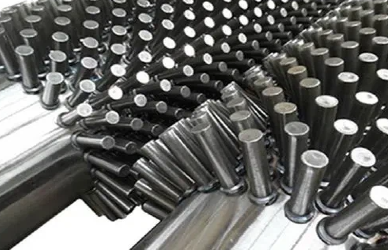
High temperatures cause materials to expand as they absorb heat, and fin tubes are no exception. When exposed to elevated temperatures, the metal in the fin tube will expand, causing the tube and its fins to lengthen and potentially alter their shape. This phenomenon, known as thermal expansion, can lead to stress on the material, which may affect the structural integrity of the fin tube system. The expansion of the tube and fins may cause deformation, misalignment, or even rupture in extreme cases, leading to compromised heat transfer efficiency or complete system failure. If the fins detach or warp, the heat exchange surface is reduced, lowering the overall performance of the heat exchanger. Managing thermal expansion is crucial to prevent these issues and maintain the system’s efficiency.
To manage the effects of thermal expansion, several methods can be employed to prevent damage to the fin tube system:
Proper Material Selection: Using materials with low thermal expansion coefficients, such as stainless steel or nickel alloys, helps minimize expansion at high temperatures, reducing stress on the system.
Expansion Joints: Incorporating expansion joints into the design allows the system to absorb the expansion and contraction of the tubes without causing damage. These joints can accommodate the movement of the tube and fins, preventing deformation and ensuring structural integrity.
Thermal Insulation: Applying thermal insulation around the fin tubes helps regulate temperature fluctuations and reduces thermal shock, minimizing the risk of rapid expansion that could cause stress or cracking.
Allowing for Clearance: Designing the system with adequate clearance around the fin tubes allows room for expansion. By ensuring the tubes have space to expand freely without being constrained by surrounding components, the risk of deformation or failure is reduced.
Regular Monitoring and Maintenance: Periodic inspections and maintenance of the system can help identify early signs of thermal stress or deformation, allowing for corrective actions before significant damage occurs.
When designing fin tube systems for high-temperature environments, it’s important to account for thermal expansion from the outset. Ensuring that the system allows for the natural movement of the materials without compromising structural integrity is key. This may include incorporating flexible materials, using reinforcement techniques, and optimizing the layout to distribute heat and expansion evenly across the system. A well-designed system that accounts for thermal expansion will help prevent damage, maintain performance, and extend the life of the heat exchanger.
Fin tubes are commonly used in industries that require efficient heat exchange at high temperatures, such as:
Power Plants: Fin tubes are integral in steam boilers, economizers, and air preheaters, transferring heat from combustion gases to water or air, improving plant efficiency.
Chemical Processing: In chemical plants, fin tubes are used in reactors and heat exchangers to efficiently manage heat in high-temperature processes, ensuring optimal reaction conditions.
HVAC Systems: In industrial HVAC systems, fin tubes are used in air-cooled heat exchangers, transferring heat from refrigerants to air or water, maintaining temperature control and energy efficiency.
Fin tubes are effective in high-temperature environments due to their increased surface area for heat transfer. However, performance is influenced by material choice and system design:
In Power Plants: Fin tubes can handle temperatures up to 1,000°F (540°C) or more, especially when made from heat-resistant materials like stainless steel or nickel alloys.
In Chemical Processing: Fin tubes in chemical plants must resist both high temperatures and corrosion. Materials like corrosion-resistant alloys ensure performance without degrading under thermal stress.
In HVAC Systems: Fin tubes function well in HVAC systems with temperatures ranging from 200°F (95°C) to 400°F (200°C), providing efficient heat transfer and energy savings, though performance can be reduced at extreme temperatures.
Answer: Stainless steel, copper alloys, and other high-temperature resistant materials are ideal for fin tubes in high-temperature environments, offering durability and heat resistance.
Answer: At elevated temperatures, the heat transfer efficiency of fin tubes can decrease due to material degradation or thermal expansion, which may cause deformation.
Answer: Yes, but they require materials designed to handle extreme heat, such as heat-resistant alloys or coatings, to maintain performance without degradation.
Answer: Regular inspections for material degradation, checking for thermal expansion effects, and cleaning to prevent fouling are key maintenance tasks to ensure optimal performance.
In high-temperature environments, fin tubes are highly effective for heat transfer due to their ability to increase surface area, which improves thermal efficiency. However, their performance depends significantly on the choice of material, as some materials can degrade or lose strength at elevated temperatures. For optimal performance, materials like stainless steel, copper alloys, and nickel alloys are essential for withstanding thermal stress, oxidation, and corrosion. Additionally, regular maintenance is crucial to ensure that the fins and tubes remain free of damage, fouling, and corrosion, which can all hinder heat transfer efficiency. By selecting the right materials and implementing regular inspections and upkeep, fin tubes can maintain their high-performance levels and ensure reliable operation in demanding high-temperature applications across various industries.


