

 注: 建议图片大小150px*50px
丨
English
注: 建议图片大小150px*50px Views: 0 Author: Site Editor Publish Time: 2025-12-31 Origin: Site
Fin tubes are essential components in heat exchangers and other thermal systems. They are designed to enhance heat transfer efficiency by increasing the surface area available for heat exchange. These tubes are commonly used in applications such as air conditioners, boilers, radiators, and cooling systems, where effective heat dissipation or absorption is crucial. Among the different types of fin tubes, extruded fin tubes are notable for their manufacturing process. In extruded fin tubes, fins are directly bonded to the base tube through an extrusion process, which involves forcing the material through a die to create continuous fins. This process ensures a strong mechanical bond between the tube and fins, resulting in highly efficient heat transfer properties and increased durability, making extruded fin tubes ideal for use in demanding thermal systems.
The base tube of extruded fin tubes is typically made from materials that offer good strength, thermal conductivity, and corrosion resistance. Common materials used for the base tube include:
Aluminum: Lightweight, with excellent thermal conductivity, making it ideal for applications requiring efficient heat transfer and cost-effectiveness.
Copper: Known for its high thermal conductivity, copper is often used in applications where heat transfer efficiency is critical, though it is more expensive than aluminum.
Stainless Steel: Highly durable and corrosion-resistant, stainless steel is often used in high-temperature and corrosive environments, such as chemical plants or power plants.
Carbon Steel: A cost-effective material with good strength and moderate thermal conductivity, suitable for industrial applications where corrosion resistance is not the highest priority.
The fins in extruded fin tubes are designed to increase surface area for heat transfer and are typically made from materials chosen for their thermal properties and ability to withstand environmental conditions:
Aluminum: Frequently used for the fins due to its excellent balance of thermal conductivity and lightweight properties. It is ideal for a wide range of heat exchange applications, especially in air conditioning and automotive radiators.
Copper: Chosen for its superior heat transfer capability, copper fins are often used in applications that demand high-performance heat exchange, although copper is more expensive than aluminum.
Steel: Carbon steel or stainless steel is used when additional strength or corrosion resistance is required. Steel fins are commonly found in high-pressure or high-temperature systems, where durability is a priority.
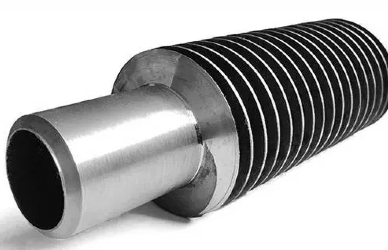
When selecting materials for fin tubes, several key factors need to be considered to ensure optimal performance and reliability in various thermal systems. These factors include thermal conductivity, corrosion resistance, and strength and durability.
Thermal conductivity is a critical property that affects the heat transfer efficiency of fin tubes. Materials with high thermal conductivity, such as copper and aluminum, are preferred because they allow heat to flow more easily through the tube, improving the performance of heat exchangers. The higher the thermal conductivity, the more efficiently heat can be transferred from the fluid inside the tube to the surrounding environment, making materials with superior thermal properties essential for efficient heat exchange.
Corrosion resistance is another essential factor, especially for applications in harsh environments. Materials that are resistant to corrosion, such as stainless steel and aluminum, are often selected for fin tubes used in industries like marine, chemical processing, or oil and gas, where exposure to moisture, chemicals, or extreme conditions is common. Corrosion-resistant materials ensure that the fin tubes maintain their integrity and performance over time, minimizing the risk of failure and reducing the need for frequent maintenance or replacement.
The strength and durability of the material used for both the base tube and fins are critical for ensuring the longevity of the fin tubes, especially in applications subjected to high pressures and temperature extremes. Materials like stainless steel and carbon steel are often chosen for their mechanical strength and ability to withstand challenging operating conditions. These materials help ensure that the fin tubes remain structurally sound under stress, providing long-lasting, reliable performance in demanding applications, such as power plants, petrochemical facilities, or high-heat systems.
When selecting materials for fin tubes, the specific application and performance requirements play a critical role. Different materials offer distinct benefits based on their thermal conductivity, corrosion resistance, strength, and cost-effectiveness. Below are the key materials used for fin tubes and how they are suited for specific applications:
Aluminum is one of the most common materials used for fin tubes, particularly in lightweight applications that require high thermal conductivity and cost-effectiveness. It is widely used in industries like HVAC systems, automotive radiators, and air conditioning, where reducing weight is a key consideration. The benefits of aluminum include:
Excellent thermal conductivity, which improves the heat exchange process.
Lightweight nature, making it ideal for portable or low-weight applications.
Cost-effective solution for general heat transfer needs.
However, while aluminum is highly effective in heat transfer, it has lower corrosion resistance compared to materials like stainless steel, making it less suitable for highly corrosive environments.
Copper is chosen for its superior thermal conductivity, making it an ideal material for high-performance applications where maximum heat transfer is critical. It is commonly used in heat exchangers, refrigeration systems, and marine applications. The benefits of copper include:
Very high thermal conductivity, enabling efficient heat exchange in systems requiring rapid heat dissipation.
Malleability, which allows it to be easily shaped and adapted to various applications.
Durability and corrosion resistance, especially in marine and humid environments.
However, copper is more expensive than aluminum and may not always be cost-effective for large-scale or lower-budget applications.
Stainless steel is often used for fin tubes in high-pressure systems, chemical plants, and marine applications where both strength and corrosion resistance are critical. Stainless steel offers the following benefits:
High strength and durability under extreme pressure and temperature conditions, making it ideal for industrial applications.
Excellent corrosion resistance, which is essential in harsh environments like chemical processing, oil and gas, and marine industries.
Long lifespan, which reduces the need for frequent maintenance or replacement.
However, stainless steel tends to be more expensive than materials like aluminum and copper, which might limit its use in cost-sensitive projects.
Carbon steel is often chosen for applications that require strength but do not face extreme pressures or corrosive environments. It is commonly used in industrial heat exchangers and boilers. The benefits of carbon steel include:
Affordability compared to stainless steel and copper, making it a cost-effective option for general heat transfer needs.
Good strength under moderate pressure and temperature conditions.
Moderate corrosion resistance, suitable for low-to-medium corrosive environments.
However, carbon steel is less resistant to corrosion than stainless steel, so it may require protective coatings in more corrosive environments.
Extruded fin tubes are specifically designed to increase the surface area available for heat transfer, which significantly improves the efficiency of heat exchangers in various applications. The fins are mechanically bonded to the base tube, enhancing heat exchange between the fluid inside the tube and the surrounding environment. This makes extruded fin tubes ideal for systems requiring efficient heat dissipation, such as in HVAC systems, automotive radiators, and industrial cooling systems.
Yes, extruded fin tubes made from materials like stainless steel and carbon steel are commonly used in high-pressure systems due to their superior strength and durability. These materials are capable of withstanding the demanding conditions of high-pressure and high-temperature environments, making extruded fin tubes a reliable choice for applications in power plants, petrochemical industries, and oil & gas sectors, where robust performance is essential.
Aluminum is frequently used in extruded fin tubes due to its lightweight nature, excellent thermal conductivity, and cost-effectiveness. It is ideal for applications that require good heat transfer but have lower budget constraints, such as HVAC systems and automotive radiators. Additionally, aluminum is highly corrosion-resistant in many environments, making it a popular choice for general-purpose heat exchangers in both industrial and commercial applications.
Selecting the right material for extruded fin tubes depends on several factors, including thermal conductivity, corrosion resistance, pressure requirements, and the application’s budget. For instance, if high thermal performance is the priority, materials like copper or aluminum may be preferred, while stainless steel or carbon steel may be better suited for high-pressure systems or corrosive environments. Evaluating these factors will ensure that the chosen material optimizes both heat transfer efficiency and long-term durability for the specific application.
In conclusion, selecting the right materials for extruded fin tubes is crucial to optimize their heat transfer efficiency, corrosion resistance, and cost-effectiveness. Materials like aluminum, copper, stainless steel, and carbon steel each offer unique advantages depending on the application requirements. Aluminum is ideal for lightweight, cost-effective solutions with good thermal conductivity, while stainless steel and carbon steel provide the strength and corrosion resistance necessary for high-pressure and demanding environments. Copper excels in high-performance applications due to its superior heat transfer capabilities. By carefully considering factors like thermal conductivity, corrosion resistance, and budget, industries can ensure that their fin tubes deliver optimal performance and longevity, ultimately enhancing the overall efficiency and reliability of their thermal systems.


