

 注: 建议图片大小150px*50px
丨
English
注: 建议图片大小150px*50px Views: 0 Author: Site Editor Publish Time: 2026-04-28 Origin: Site
A test chamber that looks advanced on paper can still become a costly mismatch if it does not fit the real work of the lab. That is why selecting a Space Environment Simulator should begin with application needs, not with catalog language or appearance. For laboratories planning satellite testing, materials evaluation, or thermal vacuum research, the right system has to match test goals, facility conditions, and long-term use. Suzhou Graceland Trading Co., Ltd. works with customers from that practical angle, helping technical teams focus on what the lab actually needs today and what it may need next.
The first step in choosing a chamber is understanding the physical reality of the item that will be tested. A lab should begin with dimensions, mass, support points, loading method, and the space needed around the test article for fixtures, sensors, and access. A chamber that seems large enough at first glance may become restrictive once instrumentation, cable routing, and mounting structures are added.
This is why chamber selection should not start with headline specifications alone. If the internal volume is too limited, the lab may struggle to run realistic setups. If loading access is inconvenient, routine work becomes slower and more complicated. The chamber should support the way the lab actually handles hardware, not force the lab into repeated workarounds.
After the test article itself, the next priority is the environment that must be reproduced. The expected vacuum level, thermal profile, test duration, and overall exposure conditions all shape the basic system requirement. A lab planning short development checks may need something different from a facility supporting long-duration thermal vacuum campaigns or qualification-related work.
This part of the decision should stay close to actual test objectives. If the lab needs stable vacuum for repeated subsystem comparison, that becomes a selection priority. If thermal cycling across a wide range is central to the work, then temperature control must be reviewed more carefully. A good choice always begins with the real mission condition the lab must simulate.
Some laboratories also need stricter cleanliness control because the test work involves sensitive surfaces, precision assemblies, or materials that react strongly to contamination. In those cases, chamber design, internal materials, and operating practice matter more than buyers sometimes expect.
A lab should think early about whether contamination control is only helpful or truly essential. That answer can affect not only the chamber interior, but also preparation workflow, cleaning standards, and test repeatability over time. When cleanliness is part of the test requirement, it should be treated as a core selection factor rather than a minor detail.
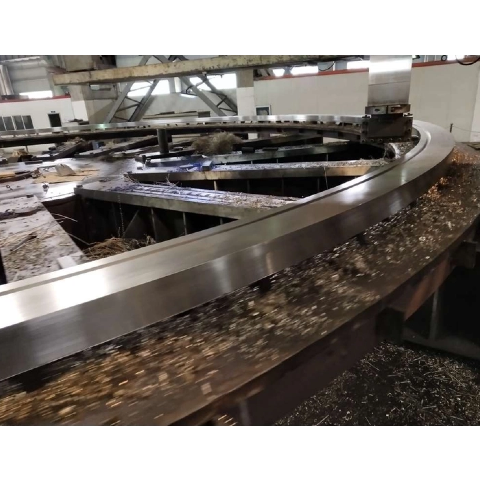
A chamber should never be judged by target pressure alone. Reaching a certain vacuum level is important, but it is only one part of useful performance. The lab also needs pump-down efficiency, pressure stability, and reliable operation during the actual test period. Without those, even a strong nominal specification may lead to less useful results.
Stable operation matters because repeatable testing depends on environmental consistency. If pressure recovery is slow, if stabilization takes too long, or if chamber behavior changes from run to run, the lab may struggle to compare results with confidence. For that reason, practical vacuum performance should always be reviewed in relation to the test program, not just the equipment brochure.
Temperature capability should be assessed with the same discipline. A wide range may look attractive, but the better question is whether the chamber can hold the required conditions with stability and acceptable uniformity. The lab should review high and low limits, ramp behavior, and temperature consistency across the chamber zone.
This is especially important when the goal is more than simple exposure. If engineers need to compare thermal response, study heat distribution, or verify functional stability under repeated cycles, then control quality matters as much as range. A chamber that reaches extreme values but struggles with uniformity may not serve the lab well in the long run.
Some laboratories need more than vacuum and temperature. Depending on the program, added functions such as solar-related input, additional monitoring channels, customized fixtures, or tailored thermal control may become worth the investment. The key is not to add options for their own sake, but to judge whether they support the real test mission.
A lab with standard development work may not need extensive customization. A lab supporting specialized aerospace programs may benefit greatly from it. The right decision depends on how closely the chamber must match project requirements and how often those specialized functions will actually be used.
Selection factor | What to check | Why it matters for the lab |
Chamber size | Internal volume and loading access | Must fit present and future test articles |
Vacuum performance | Target pressure and stability | Affects realism and repeatability |
Thermal control | Range, uniformity, ramp behavior | Determines useful test coverage |
Custom options | Monitoring, solar input, special fixtures | Supports program-specific needs |
A chamber may fit the test plan and still fail the lab if the infrastructure cannot support it properly. That is why power supply, cooling conditions, utilities, floor load, and installation space all need to be checked before the purchase is finalized. A mismatch at this stage can delay commissioning, increase cost, or limit safe operation.
This point is often underestimated during early selection. Technical teams naturally focus on the chamber and the test result, but the system must also work within the physical reality of the lab. A practical review of utilities can prevent expensive adjustment later and help ensure smoother installation and operation.
The usability of the system matters just as much as its hardware. A chamber that is difficult to operate, configure, or monitor may slow down the entire test program. The lab should review how the control system handles data collection, recipe management, parameter adjustment, and record keeping.
Good workflow support can save time across every run. It can also make the chamber easier to integrate into existing routines, especially when multiple teams share the same facility. For many labs, strong software and clear controls are not secondary advantages. They are part of what makes the system productive.
A laboratory should not choose a system only for its first immediate job. Test articles may become larger, project demands may change, and future programs may require broader capability. If the chamber is selected too narrowly, the lab may reach its limit much sooner than expected.
That does not mean every lab needs the largest possible system. It means the decision should leave reasonable space for growth. A chamber that supports both current tasks and likely future work usually offers better long-term value than one that only solves the next short-term requirement.
Long-term value also depends on how easy the system is to maintain. Service access, routine inspection, replacement planning, and operating uptime all affect the real usefulness of the chamber. A technically strong system loses value quickly if maintenance is difficult or downtime becomes frequent.
For that reason, labs should think about maintenance early, not after installation. Accessibility and routine service planning are part of equipment suitability, especially for facilities where reliable scheduling matters.
Standard layouts are useful for many general programs, but specialized aerospace work often pushes beyond standard chamber design. A lab may need a specific internal size, nonstandard fixture arrangement, added monitoring points, or a thermal vacuum configuration tailored to its test article. In these cases, custom engineering can make the difference between a chamber that merely functions and a system that truly supports the lab’s work.
This is where application-focused design becomes especially valuable. Suzhou Graceland Trading Co., Ltd. understands that some customers need a chamber matched to particular payload dimensions, operating conditions, or program constraints. When the lab’s work is specialized, a tailored solution can provide better fit, smoother operation, and more meaningful test performance over time.
The right Space Environment Simulator is chosen by starting with the lab’s real test mission and then matching chamber size, vacuum performance, thermal control, utilities, workflow, and future flexibility to that mission. A strong decision is never based on appearance alone. It comes from understanding what the lab must test, how it will operate the system, and how the equipment will continue to serve future programs. For demanding projects that need a closer fit to real application requirements, Suzhou Graceland Trading Co., Ltd. can support tailored solutions built around practical laboratory use. To discuss your project and learn more about a Vacuum Chamber Space Environment Simulator, contact us today.
The most important factor is how well the system matches the lab’s actual test mission, including test article size, required vacuum and temperature conditions, and daily operating workflow.
No. Chamber size is important, but the lab also needs to review vacuum stability, temperature control, utilities, software, maintenance access, and future growth needs.
Optional functions become valuable when they directly support the lab’s real programs, such as specialized monitoring, solar-related testing, or custom fixture requirements.
Because test scope can expand over time. A chamber that only fits the first project may become limiting later, while a system with reasonable flexibility can support better long-term value.


